Windows Whistling or Drafty in High Winds? Where Air Sneaks In
Quick Answer: A window that whistles or leaks cold air only during high wind is telling you exactly where its seal has given out, usually at the sash perimeter, the meeting rail where two sashes overlap, or a lock that no longer pulls the sash in tight. The sound itself is air moving fast enough through a narrow gap to vibrate, the same basic idea as blowing across the top of a bottle. It shows up in wind and not on calm days because wind adds outside pressure that pushes air through gaps a still day never tests. Front Range wind events, including Chinook winds that regularly gust past 60 mph and occasionally over 100, put far more pressure on a window seal than most windows are rated to handle at lower, calmer elevations. What fixes it depends on what's actually failing. Worn weatherstripping and loose hardware can often be adjusted or replaced. A warped sash or a frame pulling away from the wall usually points toward replacement instead.
You're sitting in the living room on a night when the wind is really moving through the Front Range, and there it is again: a thin, high whistle coming from somewhere near the window. Put your hand near the frame and you feel it, a faint stream of cold air working its way past the glass. On a calm evening that same window sits there silent and tight. It's only when the wind picks up that the noise and the draft show up, and that timing is itself a clue.
A window that only leaks when the wind blows isn't being dramatic. It's showing you a gap too small to notice on a still day that turns into an active air path the second outside pressure builds against the glass. Here's what's actually happening at that gap, why Colorado's wind events lean on it harder than a typical windy day elsewhere, and where to look before you decide whether the fix is a repair or a full replacement.
What That Whistle Is Actually Telling You
A window isn't a solid, sealed panel. It's an assembly, a fixed frame and one or more moving sashes, held together by weatherstripping, locks, and a track or hinge system that's supposed to compress everything into an airtight fit once it's closed. Any narrow gap in that assembly, especially one shaped by worn weatherstripping or a slightly warped edge, can act like the mouthpiece of a whistle once air is forced through it fast enough.
Sound means velocity, not just a gap
A crack that lets air through slowly on a calm day usually stays silent. Once wind pushes outside air against the glass with real force, that same gap accelerates the air into a narrow, fast-moving stream, and that's exactly what produces a whistle or a hiss. The louder or higher-pitched the sound, the tighter and more turbulent that gap generally is.
A draft means the gap is a real air path, not just a design quirk
Every operable window needs some seam where the sash meets the frame so it can open and close. Weatherstripping is what closes that seam once the window is locked. Feel moving air on your hand near the sash, and the weatherstripping at that spot has stopped doing its job, whether from age, compression set, or a lock that isn't pulling the sash in tight enough.
Wind is the test that exposes it. A perfectly still day puts almost no pressure difference across your windows. Wind changes that instantly, and the moment air is pushing against the exterior glass, any weak point in the seal becomes an active leak path instead of a theoretical one. That's exactly why a window can feel fine most of the year and turn noisy and drafty only when a front rolls through.
Where the Air Actually Sneaks In
Not every whistling or drafty window is failing in the same spot. Narrowing down the exact location tells you a lot about whether this is a simple adjustment or a sign the window itself is done.
The sash perimeter
This is the most common source, and it's usually the first place to check. The strip of weatherstripping running around the edge of the sash where it meets the frame compresses over years of opening, closing, and temperature swings until it no longer forms a tight seal. Run your hand slowly around the full perimeter of the sash on a windy day and you'll usually find the exact stretch that's leaking.
The meeting rail on double hung and slider windows
Where the top and bottom sashes overlap on a double hung, or where two sashes meet on a slider, is a natural weak point, because it depends entirely on the lock pulling both halves together tightly. If that lock is loose, misaligned, or the sash has sagged slightly, this rail is often where the whistle is loudest.
The lock and hardware
A window lock isn't just a security feature. It's part of the seal. On casement windows especially, the locking mechanism is designed to pull the sash in tight against the weatherstripping around the entire perimeter. A lock that doesn't fully engage, or hardware loosened over years of use, leaves that compression incomplete even when the window looks closed from across the room.
The frame-to-wall connection
Sometimes the leak has nothing to do with the sash at all. If the flashing and sealant between the window frame and the surrounding wall framing have failed, or were never installed correctly in the first place, wind-driven air finds its way in around the outside of the frame rather than through the moving parts. That's a separate problem from a worn weatherstrip, and it usually needs to be checked from outside the house.
Weep holes and drainage gaps
Some sliders and certain window styles include small weep holes designed to drain water out, and those same openings can occasionally become a whistling air path in a strong crosswind, particularly if a weep hole is oversized, damaged, or missing its baffle.
Tip: Test on a genuinely windy day, not a calm one. Slowly run a damp hand or a lit incense stick around the full sash perimeter, the meeting rail, and the lower corners. Moving air or wavering smoke pinpoints the exact leak location far more precisely than guessing from the sound alone, and marking each spot with painter's tape gives you a clear map before anyone inspects it.
What a Whistling, Drafty Window Is Costing You Beyond the Noise
The sound is the obvious annoyance. But the gap making that sound is doing more than turning a windy night noisy.
Windows already account for a large share of a home's heating and cooling losses, and a gap wide enough to whistle in the wind is an active, uncontrolled air path rather than the slower, steady conduction loss through the glass itself. On a gusty night, that gap can move real volumes of outside air directly into the room, and your furnace has to make up the difference every time it happens. Repeated cycles of that strain add up over a windy Colorado winter. It's wear the equipment was never designed to absorb indefinitely.
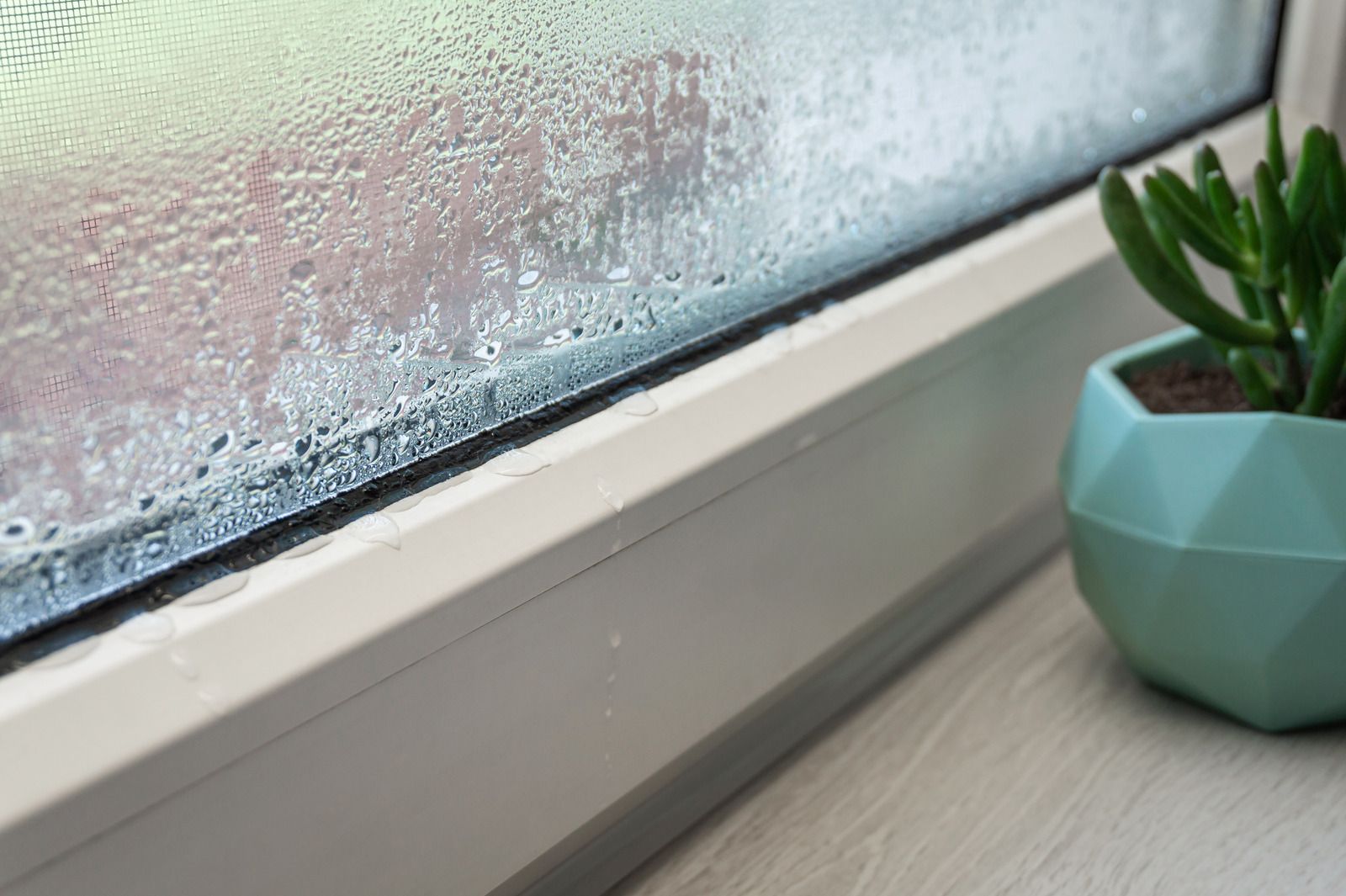
Comfort takes a hit too. Cold air infiltrating around a window sash can chill the surrounding frame and interior surfaces enough to encourage condensation nearby, and a persistent draft is often the reason one room in the house never quite feels as warm as the rest no matter what the thermostat says.
Once you understand what that gap is quietly costing, the next question is what not to do about it.
Warning: Don't treat exterior caulking around the window trim as a fix for a whistling or drafty sash. Caulk only seals the gap between the window frame and the surrounding wall. It does nothing for the moving parts inside the window itself, the sash edges, meeting rails, and locks, which is where wind-driven whistling and drafts almost always start. Caulking over the wrong gap can also trap moisture against the frame instead of letting it drain the way it was designed to.
What to Check Before You Decide Repair or Replace
Once you've located where the air is entering, a short inspection tells you whether this is a hardware fix or a sign the window has reached the end of its useful life.
Look at the weatherstripping itself
Compressed, cracked, or missing weatherstripping along the sash perimeter is often a simple, low-cost fix, especially on a window that's otherwise sound. Weatherstripping that's hardened or torn away completely is a common, fixable cause of a wind whistle, and it's usually the first thing worth ruling out.
Check whether the lock fully engages
Close and lock the window, then try to wiggle the sash. Noticeable movement after locking usually means the lock or the strike plate needs adjustment or replacement, not the entire window.
Look for sash warping or sag
Sight down the edge of the sash where it meets the frame. A visible bow, a gap wider at one end than the other, or a sash that's clearly dropped out of square points toward a structural issue that hardware adjustments won't solve.
Inspect the frame for rot or separation
Soft wood, visible gaps between the frame and the wall, or peeling paint concentrated at one corner suggest the frame itself has moved or deteriorated. That changes the conversation from a seal repair to a full window replacement.
Bring notes on exactly which windows whistle, which direction they face, and what you found at each one. Any evaluation of the windows moves a lot faster with that information already in hand.
Frequently Asked Questions
Why does my window only whistle during storms and not on regular windy days?
Storm winds create enough pressure and air velocity to force air through small window gaps. Ordinary breezes may not generate sufficient airflow to produce noticeable whistling sounds or drafts.
Can I fix a whistling window myself, or do I need a professional?
You can often replace worn weatherstripping or adjust loose locks yourself. However, warped sashes, separated frames, damaged hardware, or recurring leaks generally require professional evaluation to determine appropriate repairs.
Is a whistling window a sign I need to replace the whole thing?
Not necessarily. Weatherstripping and hardware problems are often repairable. Replacement becomes more appropriate when the sash is warped, the frame deteriorates, or repeated repairs fail to stop recurring air leaks.
Does the direction my window faces matter?
Yes. West- and northwest-facing windows often receive stronger Front Range and Chinook winds, exposing seals to greater pressure. These windows may develop noticeable whistles and drafts before more sheltered windows.
Will new weatherstripping alone stop the whistling for good?
New weatherstripping can stop whistling when worn seals are the cause. If noise quickly returns, a warped sash, loose locking mechanism, frame movement, or another underlying problem may exist instead.
Can weatherstripping wear out faster here than in other states?
Yes. Colorado’s strong winds and frequent temperature changes repeatedly stress window seals. Weatherstripping may compress, harden, crack, or loosen sooner than comparable materials installed in milder, less windy climates.
What Your Whistling Windows Are Telling You
A window that whistles or feels drafty during high winds is revealing a specific weakness that deserves attention, not automatically a complete replacement. By checking the weatherstripping, locks, meeting rails, sash alignment, and frame connection, homeowners can identify whether ordinary wear or a larger structural problem is allowing outside air through. With 30 years of experience serving Denver, CO, Colorado Western Construction understands how persistent Front Range winds expose these otherwise easy-to-miss gaps.
Finding the source of the draft also makes the next decision much clearer. Worn weatherstripping or loose hardware may require only a straightforward repair, while warped sashes, deteriorated frames, or recurring separation can indicate that replacement is more practical. Either way, the whistle provides useful information about how the window performs under real wind pressure. Addressing the actual failure point helps restore indoor comfort, reduce uncontrolled air movement, and ensure the window remains dependable through Colorado's demanding windy seasons.